

There’s a certain point in an Indian summer where everything starts to feel heavy.
The heat isn’t just outside — it follows you indoors. Fans spin endlessly, ACs run longer than they should, and yet the air never quite feels right. Nights don’t cool down. Sleep feels interrupted. Even small things — stepping out, taking a call, focusing on work — begin to take more effort than they should.
You start adjusting your life around the weather.
And somewhere in that routine, a quiet thought begins to form:
What if there was a place where you didn’t have to?
What if summer didn’t feel like something to endure — but something you barely noticed?
That’s where the idea of finding truly cool places in India in summer begins. Not just cooler cities or temporary relief, but spaces where the climate itself feels right.
Not every hill destination offers real escape. Some are slightly better than cities, but still warm. Others fluctuate too much. What actually makes a place feel comfortable comes down to a few simple, but rare conditions.
The first is temperature. When a place consistently stays under 25°C, your body reacts differently. You don’t reach for the AC. You don’t feel drained by midday. You don’t wake up sweating at night.
But temperature alone isn’t enough.
Altitude plays a role — higher elevations naturally reduce heat. Dense greenery matters just as much. Forests, plantations, and open landscapes absorb and regulate warmth in ways concrete never can. And then there’s air — clean, breathable, unfiltered air that doesn’t carry the weight of pollution or humidity.
When all of this comes together, you stop noticing the weather. And that’s the real benchmark.
In a country where most regions push past comfort during peak months, finding places below 25°C in India that also feel calm and livable is rare.

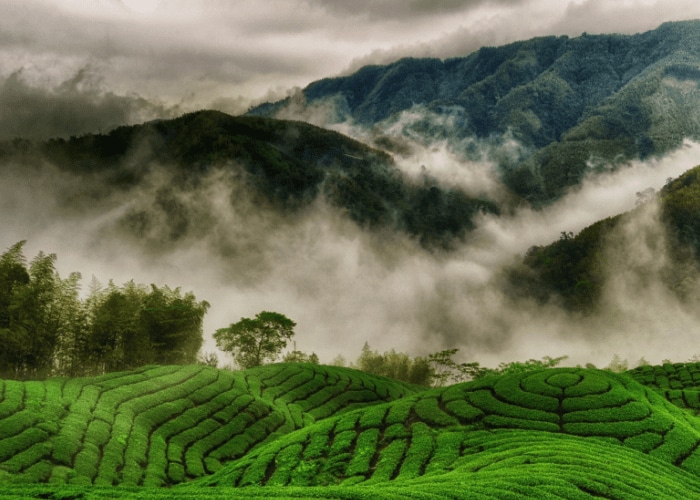
There’s a moment when you arrive in Rajakumari where something shifts almost immediately.
It’s not dramatic. There’s no sudden “wow” in the usual sense. It’s quieter than that.
The air feels lighter. The temperature feels softer. The urgency you carried with you — from traffic, deadlines, heat — starts to loosen without effort.
SpiceTree Rajakumari sits elevated, surrounded by uninterrupted stretches of green. Not curated greenery, but living, breathing landscape — hills, plantations, open sky. This natural setting does what machines try to replicate in cities: it cools, balances, and settles everything around it.
And because it’s away from crowded tourist zones, the experience remains undisturbed. No noise pushing in. No rush around you.
Just space.
Mornings begin without resistance.
You step outside and the air is cool enough to wake you gently, not shock you. There’s a quiet stillness — broken only by distant sounds of nature. No horns. No background hum of a city.
Afternoons don’t push you indoors. You can sit, walk, read, or simply exist without constantly seeking shade or artificial cooling. The temperature holds steady, almost unnoticed.
Evenings arrive slowly. Light softens, the air cools just a little more, and everything seems to move at a different pace.
And through all of this, one thing becomes clear:
You haven’t thought about the heat.
There’s no AC running in the background. No checking the weather app. No adjusting your day around discomfort.
This is what people are actually searching for when they look for cool weather places in India — not just lower temperatures, but a different relationship with their environment.
We often underestimate how much weather affects us.
In extreme heat, your body is constantly working to regulate itself. It drains energy quietly. It affects your sleep, your focus, even your patience.
In a place where the climate stays balanced, that effort disappears.
Sleep becomes deeper. You wake up without heaviness. Your mind feels clearer, less cluttered. Even doing nothing feels restorative.
It’s not just physical comfort — it’s mental space.
This is why more people are beginning to rethink travel. Not as a checklist of places to see, but as an opportunity to feel different for a while. To step out of environments that constantly demand adaptation.
When you find a place where the climate supports you, everything else begins to align.
Not every trip needs this kind of environment. But for some people, it makes all the difference.
If you’ve been working long hours in a city that never cools down, this kind of space allows you to slow down without trying.
If you’re carrying a certain level of fatigue — the kind that doesn’t go away with a weekend — being in a stable, comfortable climate helps your body actually reset.
If you’re traveling with someone, the absence of discomfort changes how you spend time together. There’s less planning, less rushing, more presence.
And if you’re someone who just wants a few days where nothing feels forced — where you don’t have to adjust constantly — then this kind of place begins to make sense.
The peak months between March and June are when this experience matters most. That’s when cities feel the most overwhelming — and when a place like this feels the most different.
Staying for two or three days gives you relief.
Staying longer allows you to settle into it.
You don’t need to overpack. Light layers are enough. The climate doesn’t demand much from you — and that’s part of the appeal.
We tend to think of summer travel as a break from routine.
But increasingly, it’s becoming something else — a way to step out of environments that quietly wear us down.
Finding truly cool places in India in summer isn’t about chasing lower temperatures. It’s about finding spaces where your body and mind don’t have to work so hard just to feel okay.
SpiceTree Rajakumari offers that kind of space.
Not loudly. Not dramatically. But in a way that stays with you — long after you leave.
1. Which are the coolest places in India during summer?
High-altitude regions in the Western Ghats, especially around Munnar, are known to stay under 25°C, offering a comfortable escape from heat.
2. Are there places in India where AC is not needed in summer?
Yes, certain elevated regions with dense greenery naturally maintain cooler temperatures, making air conditioning unnecessary.
3. Why does altitude affect temperature?
Higher altitudes have thinner air and less heat retention, resulting in cooler and more stable temperatures.
4. What makes SpiceTree Rajakumari different from other stays?
Its location, elevation, and surrounding landscape create a naturally cool, quiet, and undisturbed environment.
5. How long should I stay to feel the difference?
While even a short stay helps, 3–5 days allows your body to fully adjust and experience the benefits of a stable climate.


I can help you find the finest deals, perfect for you.


