
You wake up, but you don’t feel rested.
You go through your day — meetings, messages, tasks, maybe even a workout — and by evening, there’s a quiet heaviness sitting somewhere inside you. Not dramatic. Not visible. Just constant.
You sleep, but it doesn’t restore you.
You rest, but it doesn’t feel like rest.
And slowly, a thought begins to form:
“Why am I feeling tired all the time… even when I’m doing everything right?”
You’re not lazy.
You’re not undisciplined.
You’re not doing anything wrong.
But something isn’t working.
We’ve been taught to fix ourselves.
If you’re tired — improve your routine.
If you can’t focus — build discipline.
If your energy is low — push harder.
But what if your system isn’t underperforming?
What if it’s overwhelmed?
There is a kind of fatigue that doesn’t come from lack of effort. It comes from too much input, for too long, without pause.
It doesn’t show up as collapse.
It shows up as constant tiredness.
A mind that never fully switches off.
A body that never fully recovers.
And the more you try to push through it, the heavier it becomes.
Not very long ago — not centuries, just a few generations back — life moved differently.
Days began with light, not alarms.
Movement was part of survival, not something scheduled after work.
There were long stretches of quiet.
Sound came from the world itself.
Wind moving through trees.
Birds at a distance.
Water flowing somewhere unseen.
There was space between moments.
Space between thoughts.
And most importantly, there was silence — not something rare, but something constant.
This is the environment the human brain adapted to.
Not just physically, but neurologically.
Your brain evolved to respond to occasional signals, not constant ones.
To rest in between, not remain alert all the time.
Recovery wasn’t something you had to create.
It was built into the rhythm of life.
Now, everything is always on.
You wake up to your phone.
You move from one task to another, rarely pausing.
Your mind is constantly engaged — reading, responding, thinking, reacting.
Even your breaks are filled.
Scrolling. Watching. Listening.
Even your workouts — once a form of release — have changed.
Loud music. Intensity. Reps until failure.
Another space where you’re expected to perform.
There is no true off-switch.
From morning to night, your brain is processing something.
Noise. Screens. Information. Expectations.
And without realizing it, your entire life has become a continuous stream of stimulation.
The human brain is not designed to process endless input.
When it receives more than it can handle, it doesn’t shut down.
It adapts.
It stays alert.
It treats everything — notifications, sounds, conversations — as something that might need attention.
This is what overstimulation is.
Not just being busy, but being constantly engaged without recovery.
And over time, this leads to:
Mental fatigue that doesn’t go away
Difficulty focusing on one thing
Sleep that doesn’t feel restorative
A constant sense of internal noise
Your brain is not malfunctioning.
It’s doing exactly what it’s supposed to do —
responding to a world that never stops asking something from it.
You lie down, but your mind keeps moving.
You take a break, but you reach for your phone.
You sleep, but you wake up feeling the same.
Because what we call “rest” today isn’t actually rest.
It’s just different stimulation.
Your body pauses.
But your mind continues.
There is no silence.
No gap.
No moment where your brain is allowed to simply be.
And without that, recovery doesn’t happen.
This is why so many people quietly ask:
“Why am I always tired?”
Not because they’re not resting —
but because they’re never truly disconnected.
We’ve been trying to solve fatigue internally.
Better habits. Better routines. Better discipline.
But energy is not just something you create within yourself.
It is shaped by what surrounds you.
Your environment constantly signals your nervous system.
If it is loud, your mind stays alert.
If it is fast, your thoughts speed up.
If it is crowded and demanding, your energy drains.
You are not separate from your surroundings.
You are responding to them, all the time.
And when your environment never slows down, neither do you.
Real recovery doesn’t feel like escape.
It feels like something returning to its natural state.
You step into a place where:
The air is cooler, softer
The sounds are fewer, quieter
The pace is slower, unforced
You don’t notice it immediately.
But then something shifts.
You stop checking your phone as often.
You stop thinking in loops.
You stop feeling rushed without reason.
Your breathing deepens.
Your thoughts begin to space out.
And for the first time in a long time,
your mind is not reacting to anything.
It is just… still.

There are very few places left where this kind of stillness exists without being forced.
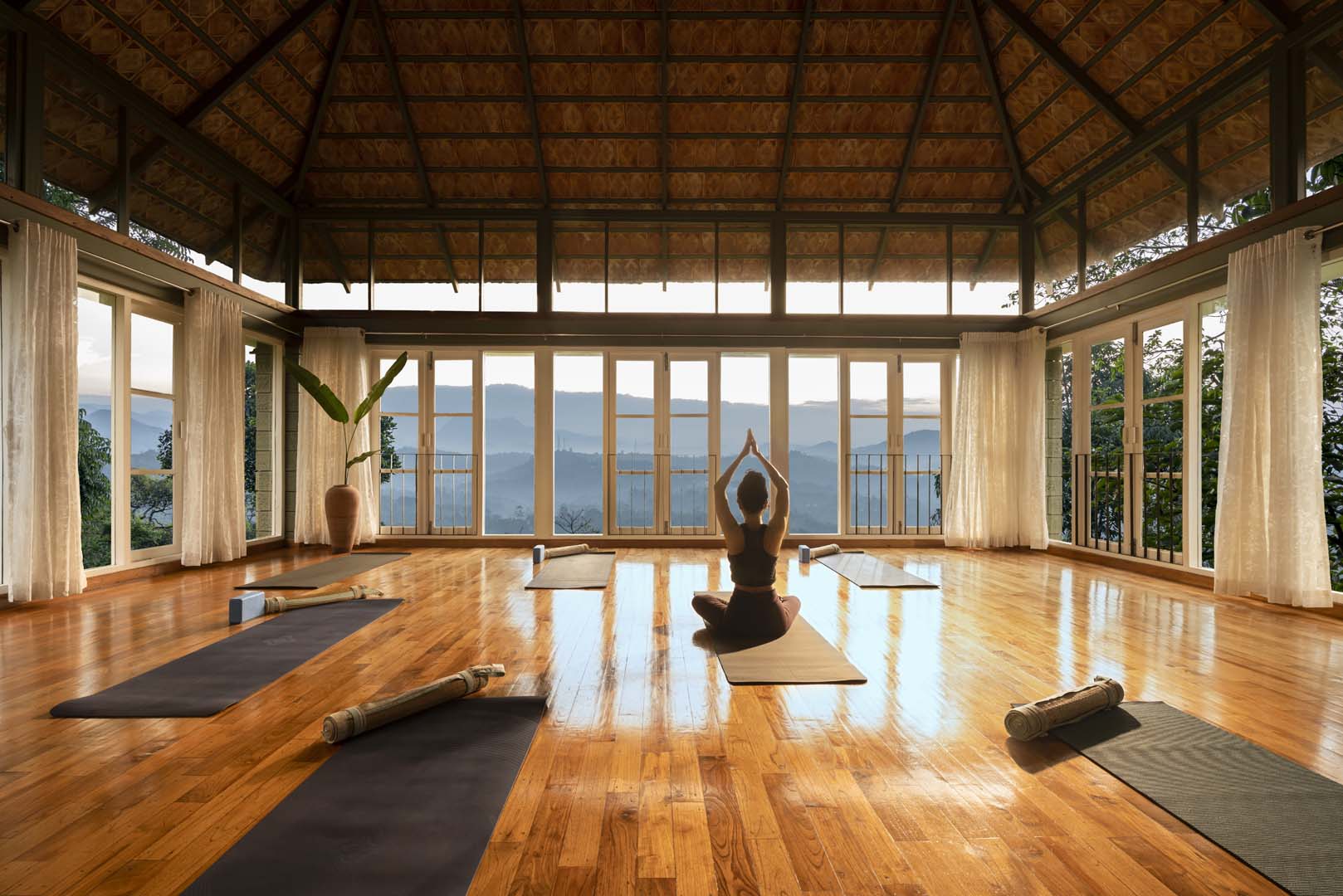
SpiceTree Rajakumari is one of them.
Set away from the usual rhythm of crowded destinations, it sits within a landscape that hasn’t been overwhelmed by noise.
The elevation brings a natural coolness.
The surrounding greenery softens everything — light, air, sound.
There is no constant background noise.
No pressure to do anything.
Just space.
And in that space, something begins to happen.
You don’t try to relax.
You don’t try to switch off.
Your mind simply follows the environment it is placed in.
It slows down.
Not because you made it —
but because nothing around you is forcing it to stay active.
The first change is subtle.
You wake up feeling slightly lighter.
Then your thoughts begin to shift.
They don’t disappear — they become clearer, slower, easier to follow.
Your body feels less tense.
Your mind feels less crowded.
And then you realize something:
You are no longer feeling tired all the time.
Not because you fixed your routine.
Not because you pushed harder.
But because the environment stopped draining you.
Your energy returns in the way it was meant to —
naturally, quietly, without effort.
For a long time, you may have believed the problem was you.
That you needed to improve something. Fix something. Push a little more.
But what if your brain has been doing exactly what it’s supposed to do?
Responding to a world that never gives it a break.
The tiredness you feel is not failure.
It’s a signal.
A response to an environment that is constantly asking more than you can give.
And sometimes, the most effective solution isn’t to change yourself.
It’s to step into a place where your mind is finally allowed to rest.
Because maybe the reason you’ve been feeling tired all the time…
1. Why am I feeling tired all the time even after sleeping?
Because mental overstimulation prevents true recovery, even if your body gets rest.
2. What are common mental fatigue causes?
Constant screen use, noise, lack of silence, and continuous performance pressure.
3. What is overstimulation?
It is when the brain receives more input than it can process, leading to fatigue and reduced clarity.
4. Can environment really affect energy levels?
Yes, your surroundings directly impact your nervous system, influencing how energized or drained you feel.
5. How can I feel energized naturally?
Spending time in quieter, nature-based environments helps the brain recover and restore energy naturally.


I can help you find the finest deals, perfect for you.


